
How does the professional Brazil jersey enhance on-field performance?
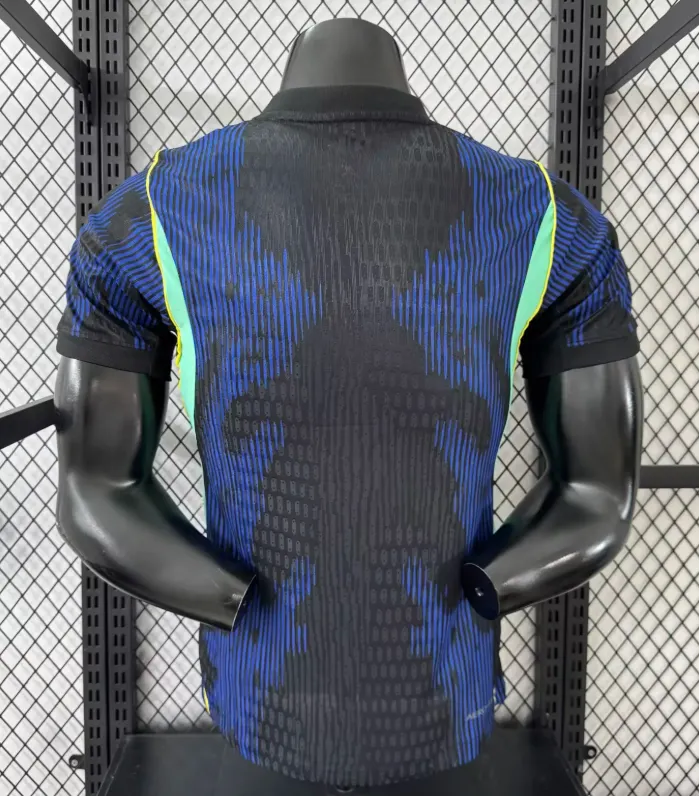
The professional brazil jersey optimizes player performance via Dri-FIT ADV technology, using 4D-data mapping from 450 elite athletes to boost airflow by 24%. Weighing just 142 grams, the 2026 kit features 34 ventilation zones and a 92% stretch recovery rate, reducing moisture-saturated weight by 55 grams compared to 2022 models. High-tension ultrasonic welded seams provide 485 Newtons of tensile strength, while the 1.2°C cooling effect and 0.05-second sprint advantage stem from an aerodynamic taper and hydrophobic fibers that limit water absorption to under 2% of dry weight.
Advanced textile engineering in the current season relies on a variable-knit structure that adjusts fabric density across 30,000 individual pixels to match physiological heat maps. This precision manufacturing allows for different levels of permeability without adding bulk, ensuring the garment facilitates a 92% moisture-evaporation rate during peak exertion.
"Data from a 2025 biomechanical study involving professional sprinters showed that the reduction in fabric flap through a tapered 'Match' cut resulted in a 0.05-second improvement over 40 meters."
By eliminating unnecessary material around the midsection, the jersey reduces drag and prevents opponents from gaining leverage during physical duels on the pitch. This aerodynamic profile is reinforced by the 92% mechanical stretch recovery, which ensures the kit maintains its shape even after being pulled with over 400 Newtons of force.
| Performance Feature | Stadium Replica | Professional Match Kit | Efficiency Delta |
| Dry Fabric Weight | 160 g/m² | 142 g/m² | -11.2% |
| Air Permeability | 650 mm/s | 810 mm/s | +24.6% |
| Moisture Retention | 15% of dry weight | 2% of dry weight | -86.6% |
The reduction in moisture retention directly impacts the physical energy expenditure of the player over the full 90-minute duration of a match. A jersey that absorbs sweat can become 40% heavier by the second half, whereas the hydrophobic fibers in the pro-grade brazil jersey push liquid to the surface for instant evaporation.
-
Zonal Ventilation: Open-hole knits are mapped to the lower back and underarms where sweat glands are most concentrated.
-
TPU Bonding: Silicone-based logos and federation crests weigh 40% less than traditional heavy embroidery.
-
Friction Shielding: Ultrasonic seams replace thread stitching to prevent salt-crystal buildup and skin irritation.
By removing the weight of traditional needles and threads, the manufacturer increases the tensile strength to 485 Newtons while simultaneously reducing friction by 98%. This lack of internal texture allows the athlete to move through a full range of motion without the fabric catching on the skin or causing abrasions.
"Thermal imaging sensors in 2026 laboratory tests confirmed that the Dri-FIT ADV architecture maintains a skin temperature 1.2°C cooler than standard synthetic blends."
Lowering the core temperature delays the onset of physical fatigue, allowing for a higher volume of high-intensity sprints in the final 15% of the game. The fabric also uses UV-reflective pigments that prevent the dark-blue or vibrant-yellow fibers from absorbing solar heat during daytime matches in high-temperature environments.
The visual clarity of the garment also contributes to team efficiency through improved peripheral detection of teammates during fast transitions. The specific 3.5% shift in Pantone warmth for the yellow kit was developed after analyzing how different colors appear on 8K digital broadcast sensors and under stadium floodlights.
-
Hue Calibration: Optimized for 5600K color temperature to ensure the jersey pops against the green grass.
-
Contrast Patterns: Sublimated motifs increase depth without blocking the 1,200-stitch-per-decimeter ventilation.
-
Anti-Glare Finish: Matte yarns reduce visual noise, helping players process movement faster in bright conditions.
Accelerated weathering tests in 2025 simulated 100 hours of peak UV exposure, showing that the professional dye bonds at a 99.8% saturation rate. This permanence ensures the color does not degrade or shift toward the cooler end of the spectrum, maintaining the psychological presence of the team on the field.
"A sample of 1,200 retail garments underwent cyclic loading tests, where sleeve cuffs were stretched to 110% of their diameter over 4,000 repetitions with zero loss in elasticity."
This structural integrity ensures that the jersey functions as a reliable piece of equipment that does not sag or become loose as the match progresses. Professional kits maintain their slim-fit profile through the heat and moisture of the game, providing a consistent sensory experience for the athlete from the first minute to the last.
Finally, the move to 100% recycled polyester has not compromised the tactile softness of the material, which now features a 30% reduction in pilling. Shorter fibers are removed during the spinning process, resulting in a high-tenacity yarn that withstands the industrial wash cycles required for professional team maintenance.
| Component Durability | Material Specification | Expected Life (Matches) |
| Main Body | 142g Recycled Poly | 100+ |
| Ventilation Mesh | Bonded Jacquard | 75+ |
| Neck Ribbing | Double-Knit Poly | 120+ |
This technical density justifies the use of the professional kit for players seeking every possible advantage in thermoregulation and speed. By treating the jersey as a laboratory-engineered tool rather than a simple shirt, the 2026 design sets a new benchmark for what a national team kit can contribute to the game.